
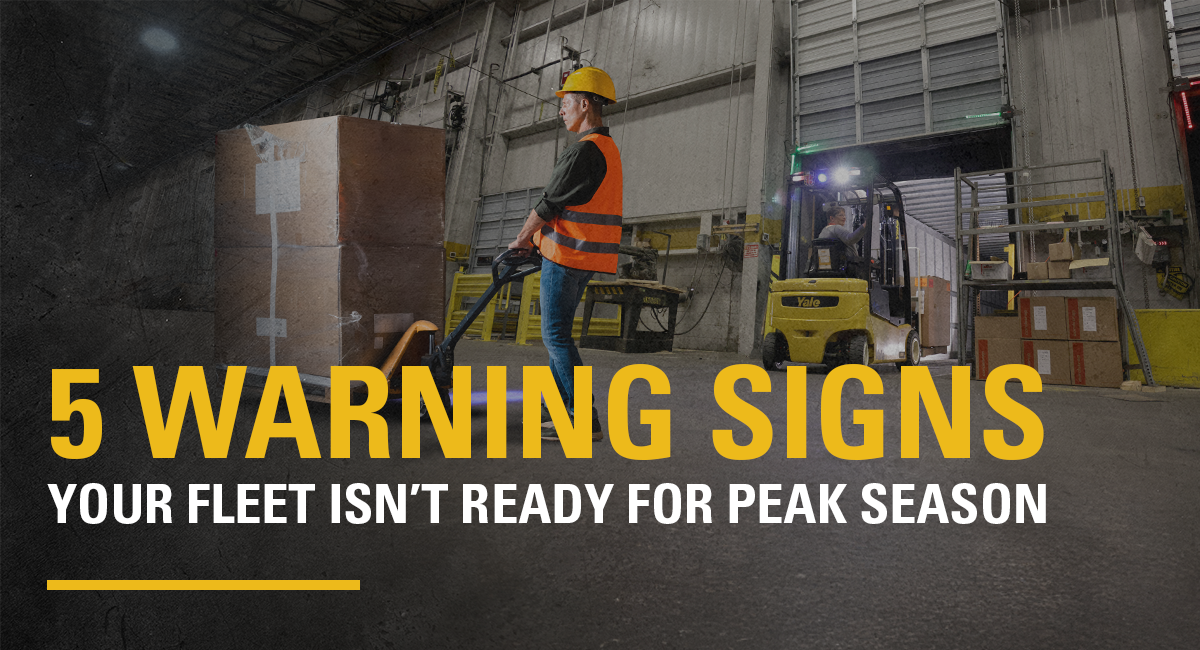
The Warning Signs Most Fleets Miss
Most operations don’t find out their equipment isn’t ready for peak season until peak season is already underway. Volumes climb, shifts extend, and suddenly a forklift that’s been “running fine” starts breaking down every other week — right when there’s no room in the schedule to take it out of service.
By that point, the fix is reactive: rush a repair, scramble for rental availability, or lean on whatever equipment is left running and hope it holds. None of those are good positions to be in during your busiest weeks of the year.
The operations that avoid this aren’t the ones with newer fleets or bigger budgets. They’re the ones who caught the warning signs early enough to act on them. Here’s what to watch for.
1. Maintenance Keeps Getting Deferred
A skipped inspection here, a “we’ll get to it next month” repair there — on their own, these decisions feel harmless. Stacked together across a fleet, can increase the risk of equipment failures when peak-season demands put more hours and utilization on the fleet. If your maintenance schedule has more exceptions than compliance lately, that’s not a maintenance problem. It’s an early warning sign.
2. Utilization Data Doesn’t Match Reality
Ask most operations managers if their fleet has enough capacity and you’ll get a confident yes — but fleet capacity isn’t just about how many trucks you have; it’s about whether the right equipment is available where and when it’s needed. A fleet can look adequately sized on paper and still be running certain assets into the ground while others sit underused. That imbalance rarely shows up until demand spikes and those heavily utilized assets become bottlenecks.
3. “We’ll Figure It Out If Something Breaks” Is the Backup Plan
Every fleet eventually has a piece of equipment go down at a bad time — that’s not avoidable. What separates a minor disruption from a costly one is whether there’s already a plan for it. If the honest answer to “what happens if our busiest forklift fails next week” is a shrug, that’s a gap worth closing before peak season, not during it.
4. Rental Requests Are Happening Last-Minute
Flexible equipment, including short-term rentals, is one of the best tools for covering a temporary capacity spike without a long-term capital commitment — but only if there’s still availability when you need it. Operations that wait until they’re already feeling the squeeze often find that the specific equipment they need, when they need it, may not be available. Requesting rental support ahead of demand, instead of in response to it, is one of the clearest signs of a team that’s planning rather than reacting.
5. Operators Are Learning on the Fly
More volume often means more shifts, more hours, and sometimes operators running equipment they’re less familiar with. If pre-shift inspections are inconsistent, training and certifications haven’t been checked recently, or safety expectations vary by shift, peak season is where that inconsistency tends to show up — usually as downtime, and sometimes as something more serious.
None of This Has to Be a Surprise
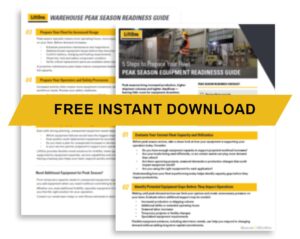
Every one of these signs is visible well before peak season hits, if you know where to look — and every one of them is something you can address with enough lead time.. That’s exactly why we built the Peak Season Equipment Readiness Guide: a practical, step-by-step framework to evaluate your current fleet capacity, close gaps before they become downtime, and build a backup plan that actually holds up when it’s tested.
At LiftOne, we help customers assess how aisle width, rack configuration, and equipment selection work together—ensuring operations remain productive without compromising safety. Choosing the right combination can lead to better throughput, reduced product damage, and improved overall workflow.
|
If you’re already seeing one or more of these warning signs and need capacity now, LiftOne’s rental fleet — forklifts, trailer spotters, railcar movers, and aerial lifts — is available without a long-term commitment.
[Request a Rental →]
Seeing one or more of these warning signs? The next step is to understand where your fleet stands before peak demand arrives. The Peak Season Equipment Readiness Guide walks you through five practical steps to identify gaps, plan for increased demand, and build a fleet strategy that keeps your operation moving.