Why Downtime Preparation Should Start Now
As peak season approaches, businesses focus on inventory, staffing, and customer demand. However, one critical factor is often overlooked until it becomes a problem: equipment downtime.
Whether it’s a forklift, reach truck, order picker, or other material handling equipment, unexpected breakdowns can bring productivity to a halt. Delayed shipments, idle employees, missed deadlines, and emergency repair costs can quickly impact both operations and profitability.
While no equipment is immune to wear and tear, many downtime events can be prevented through proactive maintenance, timely repairs, and the right support strategy. Preparing now can help ensure your operation stays productive when demand is at its highest.
The Cost of Downtime During Peak Season
When equipment goes down during busy periods, the impact often extends beyond repair costs. Downtime can create workflow bottlenecks, reduce labor efficiency, delay customer orders, and put additional strain on the rest of the fleet.
As utilization increases during peak season, even a short disruption can affect productivity across the entire operation.
Why Planned Maintenance Matters
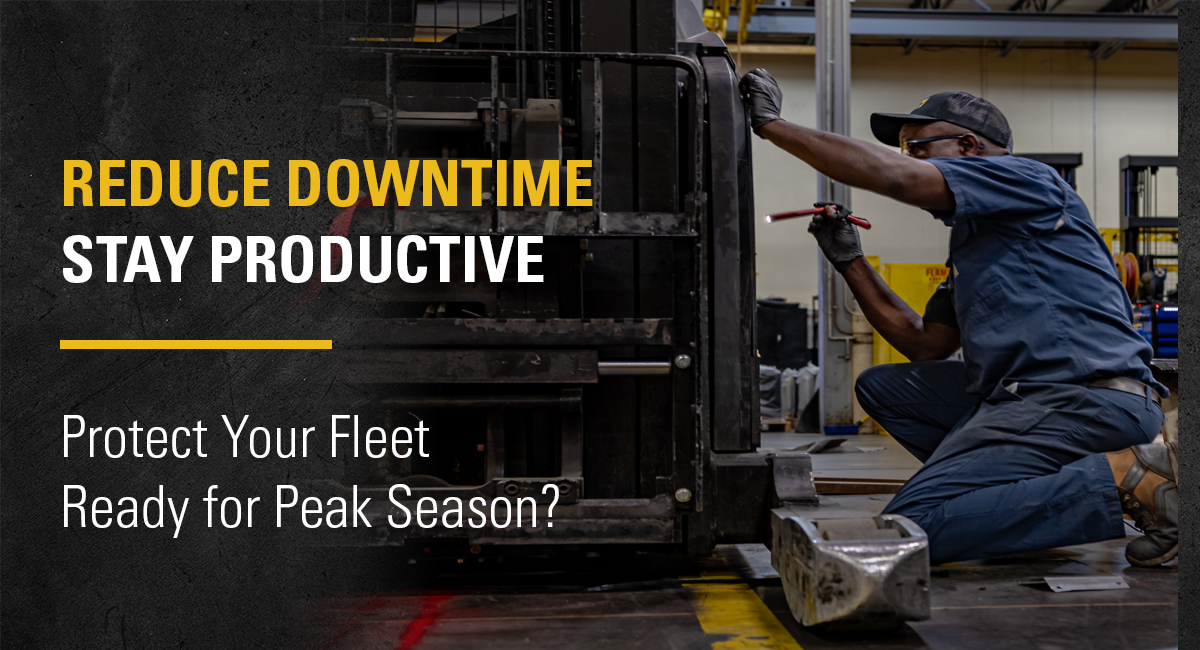
One of the most effective ways to reduce unplanned downtime is through routine preventive maintenance. Regular inspections help identify worn components, performance issues, and potential failures before they become costly breakdowns.
For many operations, a structured planned maintenance (PM) agreement helps ensure service is completed on schedule and critical issues are addressed before they impact productivity. A proactive maintenance strategy can improve equipment reliability, extend service life, and reduce emergency repairs during peak demand periods.
Don’t Overlook Parts Availability
Even well-maintained equipment occasionally requires repairs. When that happens, access to the right parts becomes critical.
Long wait times for replacement parts can keep equipment out of service far longer than necessary. Working with a partner that offers dependable parts support can help minimize downtime and get equipment back in operation more quickly.
Supporting Mixed-Brand Fleets
Many facilities operate equipment from multiple manufacturers, which can make maintenance and repairs more complex. A service partner with mixed-brand support capabilities can help streamline maintenance schedules, simplify fleet management, and provide a single source for service across your operation.
This approach helps ensure consistent maintenance standards while reducing administrative burden.
Prepare Before Problems Arise
Even well-maintained equipment occasionally requires repairs. When that happens, access to the right parts becomes critical.
Long wait times for replacement parts can keep equipment out of service far longer than necessary. Working with a partner that maintains a strong parts inventory and responsive support network can help minimize downtime and return equipment to operation more quickly
Key Takeaways for Peak Season Readiness
- Schedule preventive maintenance before demand ramps up.
- Address existing equipment issues before they become breakdowns.
- Ensure critical replacement parts are readily available.
- Review service coverage and PM agreements ahead of peak season.
- Partner with a provider that can support mixed-brand equipment fleets.
Keep Your Fleet Ready for Peak Season
LiftOne helps businesses reduce downtime through planned maintenance agreements, responsive service, extensive parts support, and mixed-brand fleet expertise. By taking a proactive approach before peak season begins, operations can improve equipment reliability, maximize uptime, and stay focused on meeting customer demand. Contact our team to learn how LiftOne can support your fleet.