Key Takeaways
- Prevent Downtime: Replace reactive repairs with planned maintenance to reduce unexpected failures and keep loading operations moving.
- Protect Critical Equipment: Regular inspections, lubrication, adjustments, and wear checks extend the life of dock levelers, overhead doors, restraints, and seals.
- Address Conditions: Heat, humidity, storms, and high equipment usage accelerate wear, making proactive maintenance especially valuable.
- Catch Problems Early: Slow door operation, unusual noises, damaged seals, poor trailer alignment, and frequent repairs signal that it’s time for service.
- Streamline Service: Partnering with a single provider for dock, door, and material handling support improves coordination, uptime, and long-term equipment performance.
In many facilities, the loading dock does not get much attention until something stops working. But when a dock leveler, overhead door, or restraint goes down, the impact is immediate. Shipments slow down, workflows get disrupted, and safety risks increase.
For operations across the Southeast, where facilities often run long hours in demanding conditions, dock and door performance plays an important role in overall uptime. That is why more companies are taking a proactive approach to maintenance instead of waiting for problems to turn into larger disruptions.
Why Dock & Door Equipment Is Critical
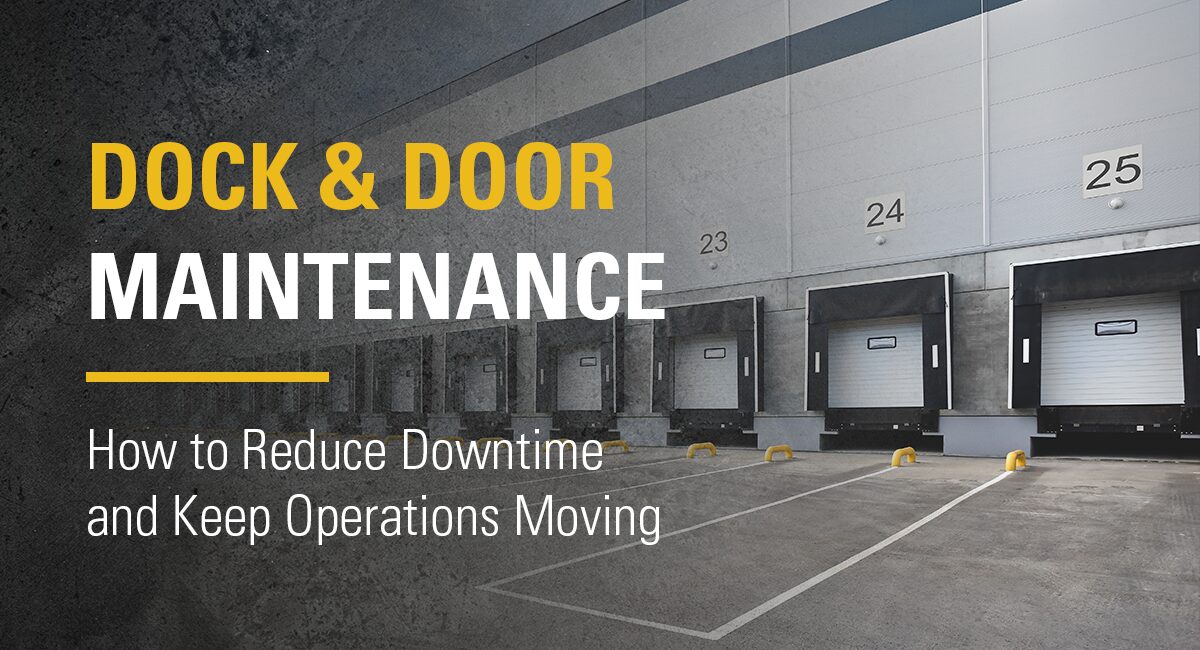
Your loading dock is one of the busiest areas of the facility. It connects transportation to your internal operation and supports constant movement from trucks, forklifts, and personnel throughout the day.
Over time, that activity creates wear on critical equipment like dock levelers, overhead doors, vehicle restraints, seals, and shelters. When these systems are not properly maintained, performance begins to decline. A door may cycle slower, a leveler may stop aligning properly with trailers, or worn seals may begin impacting environmental control inside the building.
Because the dock directly affects inbound and outbound flow, even small equipment issues can create delays throughout the operation. Dock and door systems are also closely tied to forklift movement and material handling efficiency, making them an important part of maintaining productivity across the warehouse.
Reactive Repairs vs. Planned Maintenance
Many facilities operate in a reactive maintenance cycle where equipment is repaired only after something breaks. While that approach may seem manageable in the short term, it often leads to larger operational challenges over time.
Unplanned dock and door failures can delay shipments, create bottlenecks, increase labor inefficiencies, and introduce safety concerns at the dock. Emergency repairs also tend to be more disruptive and costly than planned service.
A proactive maintenance strategy helps reduce these issues by identifying wear and performance concerns earlier, before they turn into larger failures. Planned maintenance programs typically include inspections, lubrication and adjustment of moving parts, debris removal, and monitoring equipment for signs of wear.
The goal is not to eliminate repairs entirely, but to reduce unexpected downtime and create more predictable equipment performance across the facility.
Why Dock & Door Maintenance Matters in the Southeast
Facilities across the Southeast operate in conditions that can accelerate wear on dock and door systems. Heat, humidity, storms, and high cycle counts all place additional strain on equipment over time.
Many operations in the region also run extended hours or multiple shifts, increasing the daily demand placed on doors, levelers, and restraints. Without regular maintenance, these conditions can shorten equipment lifespan and increase the likelihood of unplanned downtime.
Common Signs Your Dock or Door Needs Service
Most dock and door issues do not happen without warning. Common signs that equipment may need attention include:
- Slower or inconsistent door operation
- Unusual noises from levelers or mechanical systems
- Gaps in seals or shelters
- Equipment not aligning properly with trailers
- Frequent repair calls
Addressing these issues early can help prevent larger disruptions and reduce downtime at the dock.
LiftOne’s Integrated Dock & Door Service Approach
LiftOne supports dock and door equipment with an in-house service model designed to improve consistency, communication, and long-term equipment performance. Instead of managing multiple vendors for dock equipment, forklifts, and warehouse support, when you partner with LiftOne we can streamline support as we understand how your entire operation works together.
LiftOne’s dock and door services are currently available in select locations across the Carolinas, with continued expansion throughout the Southeast. Learn more about our dock and door solutions.
FAQ: Dock & Door Maintenance
How often should dock and door equipment be serviced?
Most facilities benefit from scheduled maintenance at least once or twice per year, depending on usage levels and operating conditions. High-volume operations may require more frequent service.
What does planned dock and door maintenance include?
A planned maintenance program typically includes routine inspections, lubrication and adjustment of moving parts, debris removal, and identifying worn components before they fail. The goal is to reduce unexpected downtime, improve safety, and extend equipment life.
What are the most common dock and door repairs?
Common repairs include worn springs, damaged dock levelers, door misalignment, and deteriorated seals or shelters.
What is the difference between planned maintenance and repair?
Planned maintenance focuses on preventing issues through scheduled service and inspections, while repair addresses equipment after it fails.